How, Why, and When Should You Vacuum Under a Bed?
- Space under your bed collects dust, dust mites, dead skin, pet hair, pollen, and debris that harm bedroom air quality.
- Breathing bedroom air near the dusty space under the bed worsens allergies, triggers asthma, and harms sleep quality.
- Clear stored items, use crevice tool or HEPA vacuum, run robot or flat mop for low beds, vacuum head to foot, then wipe the frame.
- Vacuum under the bed at least twice monthly; weekly if pets, allergies, or heavy pollen seasons to prevent rapid buildup.
- Use sealed storage, washable bed skirts, close windows during pollen, run a HEPA purifier, make it routine, hire professionals for neglected deep cleans.
If you only vacuum the parts of your bedroom you can see, you’re missing one of the dirtiest spots in your entire home. The space under your bed collects dust, allergens, pet hair, and more — and it happens faster than you’d think.
Whether you live in a Grayson subdivision or a home in Winder, the air quality in your bedroom depends on what’s hiding beneath your bed frame. Here’s everything you need to know about why, how, and when to vacuum under your bed — and what happens if you don’t.
What’s Actually Under Your Bed Right Now
Even in the cleanest homes, the space under a bed becomes a collection zone for:
- Dust and dust mites — A single gram of dust can contain up to 19,000 dust mites. Under-bed spaces are dark, warm, and undisturbed — perfect conditions for these microscopic creatures to thrive.
- Dead skin cells — You shed roughly 1.5 grams of dead skin per day, and much of it falls off while you sleep. Those cells drift downward and accumulate under the bed.
- Pet hair and dander — If your pet sleeps in the bedroom (or sneaks in when you’re not home), their fur and dander settle quickly in this low-traffic zone.
- Pollen and outdoor allergens — In Georgia, where pollen season can coat everything from March through May, open windows and shoes track allergens directly into the bedroom. They settle under furniture where airflow is minimal.
- Hair, food crumbs, and debris — Midnight snacks, dry shampoo residue, and everyday household particles all end up under the bed.
If left unchecked for weeks or months, this buildup doesn’t just look gross — it actively impacts the air you breathe for 6-8 hours every night.
Why It Matters for Your Health
When you sleep, you’re breathing in the air closest to your mattress. If the space directly below is packed with dust, dander, and mites, those particles circulate into your breathing zone all night long.
This is especially problematic for people with:
- Allergies — Dust mite waste is one of the most common indoor allergens. Symptoms include congestion, sneezing, itchy eyes, and worsened asthma.
- Asthma — The American Lung Association identifies dust mites as a key asthma trigger, particularly for children.
- Sensitive skin — Dust buildup can aggravate eczema and other skin conditions.
Even if no one in your household has diagnosed allergies, you may notice better sleep quality simply by keeping this area clean. Many of our clients across Lawrenceville and Buford have told us they sleep noticeably better after a thorough bedroom deep clean.
How to Vacuum Under a Bed the Right Way
Vacuuming under a bed isn’t complicated, but doing it thoroughly requires a bit of strategy.
Step 1: Clear the Area
Remove anything stored under the bed — storage bins, shoes, boxes, random items that migrated there. This is also a great time to assess whether under-bed storage is creating a dust trap. Fabric storage containers without lids catch and hold dust; sealed plastic bins are a better choice.
Step 2: Use the Right Attachment
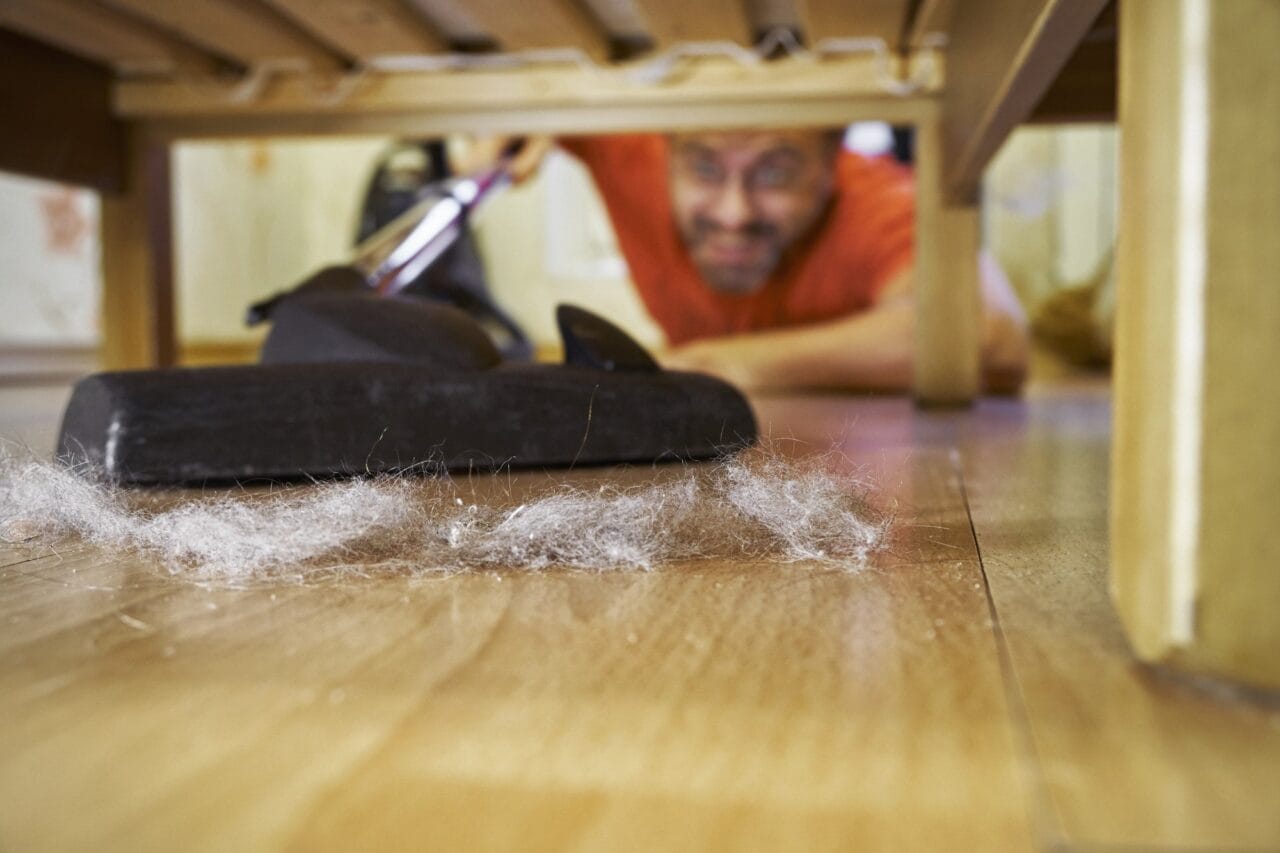
Your vacuum’s crevice tool or flat extension wand is ideal for reaching under a low bed frame. If your vacuum has a HEPA filter, even better — it captures the fine particles that a standard filter would blow back into the air.
For beds too low for a standard vacuum, consider:
- Robot vacuums — Most models are under 4 inches tall and can be programmed to clean daily
- Flat mop heads — A dry microfiber flat mop captures dust effectively on hard floors
- A hair dryer — On hardwood floors, a blow dryer on a cool setting can push dust bunnies out where your vacuum can reach them
Step 3: Work Methodically
Start from the headboard side and work toward the foot of the bed. Then vacuum along both sides. Don’t forget to get the area directly under the center of the mattress — that’s where dust accumulates most because it has the least airflow.
Step 4: Wipe the Bed Frame
After vacuuming, run a damp microfiber cloth along the bed frame rails, slats, and legs. Dust clings to these surfaces and will fall right back to the floor if you skip this step.
How Often Should You Vacuum Under Your Bed?
The short answer: at least twice a month, or once a week if anyone in the home has allergies or asthma.
Here’s a practical guideline:
- Weekly — Homes with pets in the bedroom, allergy sufferers, or heavy pollen seasons (spring in Georgia)
- Every two weeks — Most households; add it to your regular cleaning routine
- Monthly at minimum — If the bed is high enough for good airflow and no one has sensitivities
The key is consistency. Once you fall behind, under-bed dust compounds quickly — what takes two minutes every other week can become a 20-minute project after a few months of neglect.
Tips for Keeping Under the Bed Cleaner Between Vacuumings
- Use a bed skirt strategically — Bed skirts can hide mess, but they also trap dust. If you use one, choose a washable fabric and launder it monthly.
- Switch to sealed storage — Replace open baskets with airtight containers to reduce dust-catching surfaces.
- Keep bedroom windows closed during high-pollen days — This reduces the amount of outdoor allergens settling under your furniture.
- Run an air purifier — A bedroom HEPA air purifier reduces airborne particles before they settle.
- Make it part of your weekly cleaning checklist — The best way to stay on top of it is to make it automatic.
When to Call in a Professional
If it’s been months (or longer) since anyone cleaned under your beds, a one-time deep cleaning service can reset the entire bedroom. Professional cleaners — like our teams serving Auburn, Loganville, Monroe, and throughout Gwinnett County — move furniture, vacuum thoroughly, wipe down all surfaces, and leave the room in a state that’s easy to maintain going forward.
From there, a recurring cleaning plan keeps every room — including the hidden spots — consistently clean without you having to think about it.
Ready to breathe easier? Request a free quote from Rescue My Time Cleaning Service today.
Share this article
Related Posts


Follow us
A quick overview of the topics covered in this article.